
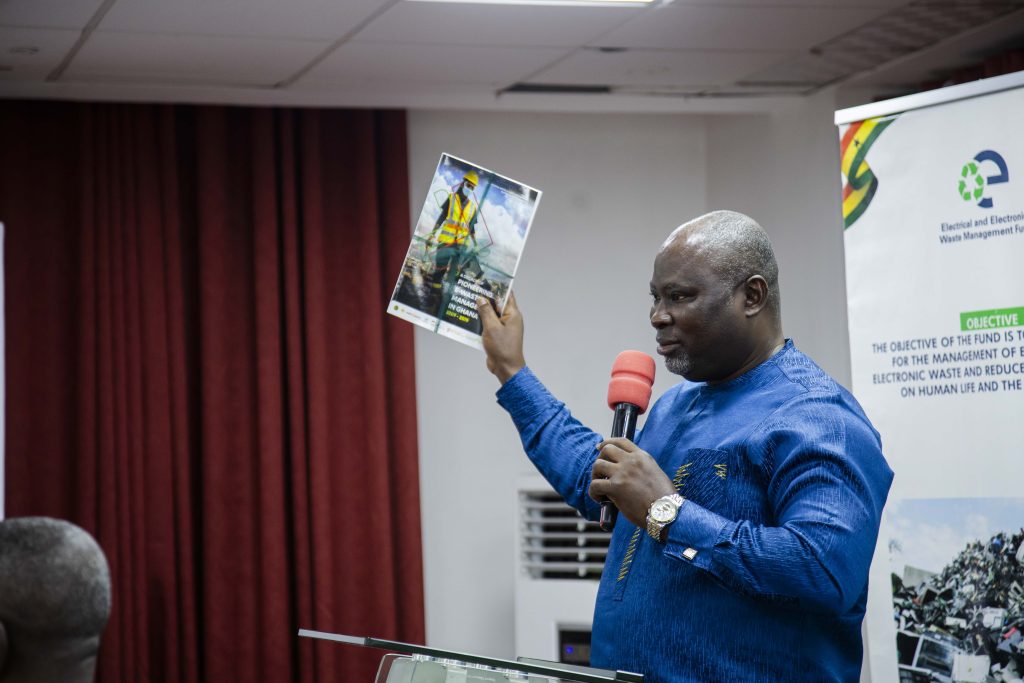
Green Advocacy Ghana (GreenAd), together with the E-Waste Management Fund, Pure Earth, and GIZ Ghana, on Tuesday, June 9, 2026, launched “A Decade of Pioneering E-Waste Management in Ghana (2009–2019)” – a landmark publication chronicling how Ghana transformed e-waste from an uncharted challenge into a structured, nationally coordinated sector.
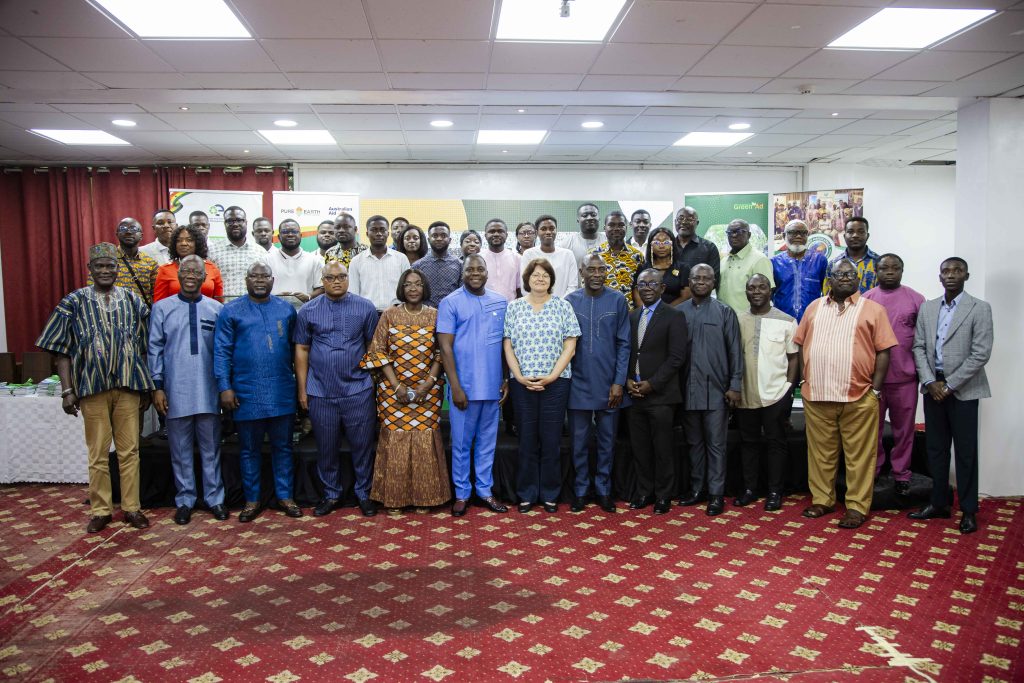
The launch, held at Mikaddo Conference Centre in Accra, also served as a Recognition Award Ceremony, honouring the institutions, researchers, government officials, international partners, and informal sector workers whose collective effort made this decade of progress possible.
Where it all began
In 2009, GreenAd, with the guidance of the Ministry of Environment, Science, and Technology (MEST) and the Environmental Protection Authority (EPA), published Ghana’s first national proposal for controlling the importation and management of e-waste. At the time, public awareness on the issue was limited, technical knowledge was scarce, and no regulatory framework existed. That foundational document set in motion a decade of coordinated effort.
A decade built on evidence
Eight major research studies underpinned the decade’s progress. Among the most consequential was the Toxic Sites Identification Programme, which measured pollution levels at the Agbogbloshie scrapyard at 9 out of 10 on the Blacksmith Pollution Index, earning it a place among the Top Ten Most Polluted Places in the World. Health assessments of workers found significantly elevated levels of heavy metals, including Lead, Cobalt, Chromium, and Selenium.
A Socio-Economic Assessment shed further light on the sector’s true scale: approximately 33,600 workers employed nationally, generating an estimated annual value of between $105 million and $268 million yet entirely absent from Ghana’s official GDP figures due to its informal status.
Turning research into real-world action
Evidence guided practice throughout the decade. The Agbogbloshie Recycling Centre (ARC), established in 2014 in partnership with Pure Earth, NYA, and GASDA, introduced motorised cable-stripping machines as a clean alternative to open burning, a practice that exposes workers and surrounding communities to toxic fumes. During its pilot phase, the ARC processed approximately 25 tonnes of waste cables, enabling workers to recover clean copper and aluminium at premium market prices.
The GIZ-OekoPilot Incentive System (2018–2019) built on this momentum, introducing a payment mechanism for waste cable collection that completed approximately 1,389 individual transactions totalling 27.5 tonnes. This pilot directly informed the larger MEST-KfW Incentive Payment System, which, between 2020 and 2022, purchased over 457,000 pounds of cables, 69,000 pounds of batteries, and 232,000 pounds of thermoplastics, diverting all of it from burning and hazardous informal recovery.

Key milestones, 2009–2019
- 2009: GreenAd publishes Ghana’s first national e-waste importation and management proposal, in partnership with MEST and EPA.
- 2009–2019: Eight major research studies conducted, building the evidence base on pollution levels, health impacts, and sector economics.
- 2014: Agbogbloshie Recycling Centre (ARC) established with Pure Earth, NYA, and GASDA; motorised cable-stripping introduced as clean alternative to burning.
- 2016 Enactment of the Hazardous and Electronic Waste Control and Management Act, 2016 (Act 917) and accompanying Regulations (LI 2250), providing Ghana’s comprehensive legal framework for e-waste.
- 2018–2019: The GIZ-OekoPilot Incentive System was introduced, purchasing 27.5 tonnes of waste cables through 1,389 transactions and laying the foundation for national scale-up.
A landmark legal framework
One of the decade’s most enduring achievements was the passage of the Hazardous and Electronic Waste Control and Management Act, 2016 (Act 917), together with its Regulations (LI 2250). These instruments gave Ghana a comprehensive legal foundation for e-waste governance, including the Eco-levy on imported electrical and electronic equipment and the statutory basis for the National E-Waste Management Fund.
Recognising those who made it possible
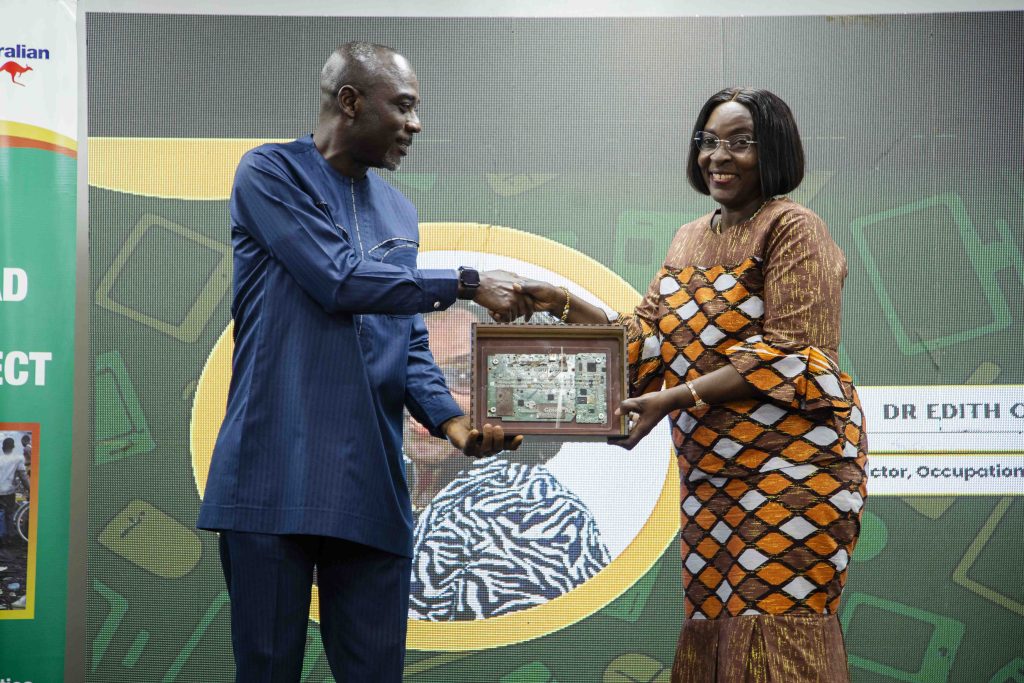
Today’s event honoured government officials who championed early regulatory efforts, researchers who built the scientific evidence base, international partners who provided technical and financial support, and informal sector workers whose cooperation was essential to every practical intervention.
The road ahead
The publication does not simply look back; it charts the path forward. The National E-Waste Management Fund is now positioned to transition Ghana’s approach from a patchwork of pilots into a nationally coordinated system. Anchored in Extended Producer Responsibility, the Fund’s agenda includes co-financing regional processing hubs, establishing a national take-back and drop-off network, deploying a digital traceability platform, and formalising informal sector workers with access to health services and equipment support.
The long-term vision is a circular economy for electronics, one in which Ghana captures increasing value from the urban mine of discarded devices, protecting both people and the environment in the process.
Access a copy of the report here.
Useful Links
0 Comments