
By: Gladys Essuman, BSc. Earth Science – Volunteer
Empowered by knowledge, compelled to act. During a workshop led by Pure Earth in 2024 at the University of Ghana-Department of Earth Science, I gained a deeper understanding of the pressing issues of lead poisoning and pollution. As we all contribute to the environment, it’s crucial we understand the impact of our actions. Through this blog, I’d like to share insights and spark a conversation about lead poisoning and pollution – because awareness is the first step to change.
The Reality of Lead Poisoning
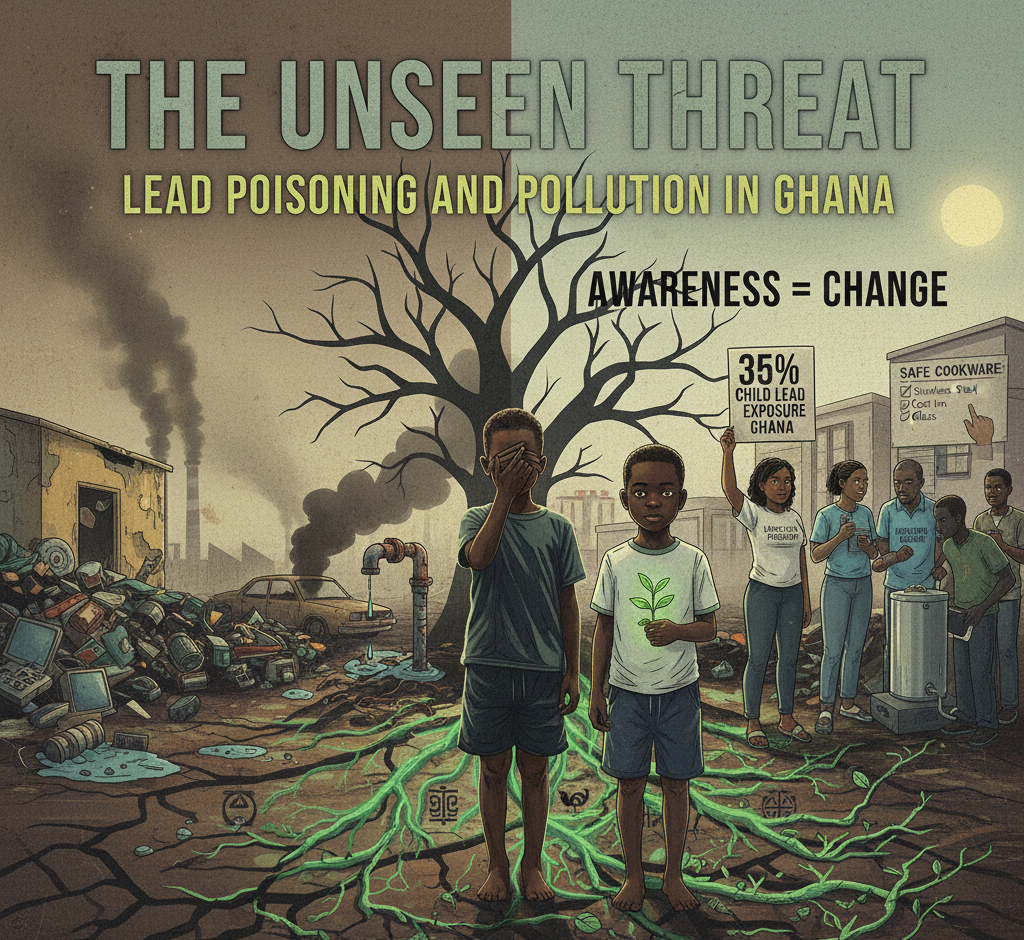
Lead poisoning is a silent killer, affecting millions worldwide. According to the World Health Organization (WHO), lead exposure accounts for 143,000 deaths and 9.3 million disability-adjusted life years (DALYs) lost annually. In Ghana, a study by the Ghana Health Service found that 35% of children under 5 years have elevated blood lead levels.
Sources of lead exposure include:
- Lead-based paints: Many buildings in Ghana still have lead-based paints, which can chip off and be ingested.
- Contaminated water: Lead can leach into water sources from old pipes and fittings.
- Polluted air: Lead emissions from vehicles and industries contribute to air pollution.
- Industrial activities: Mining, smelting, and recycling of lead-containing products can contaminate the environment.
- Cookware: Lead-contaminated cookware, such as metallic pots and pans, can leach lead into food.
The Devastating Impact of Pollution
Pollution is a broader issue that encompasses lead poisoning, with far-reaching consequences for our environment, health, and economy. Air pollution, for example, is responsible for an estimated 7 million premature deaths worldwide each year (WHO). In Ghana, the cost of environmental degradation is estimated to be around 10% of GDP annually (World Bank).
Examples of pollution’s impact:
- The Odaw River in Ghana, polluted with industrial and domestic waste, has been linked to health issues in nearby communities.
- Air pollution in Accra, Ghana’s capital, exceeds WHO limits, causing respiratory problems for residents.
Ghana’s Situation
In Ghana, lead poisoning and pollution are significant concerns, particularly in areas with industrial activities. The use of lead in various products, such as paints, batteries, and cosmetics, exacerbates the problem. For instance, a study found that 15 out of 46 paint samples analysed contained lead levels far above the acceptable limit of 90 parts per million (ppm), a sharp increase from 2023. Some paints previously meeting safety standards now surpass the 90 ppm threshold, with the highest lead content reaching a staggering 200,000 ppm. The Ghana Environmental Protection Agency (EPA) and Ghana Standards Authority are working to address the issue, enforcing regulations to protect human health and the environment.
Affected Regions
Lead poisoning and pollution affect several regions in Ghana, including:
- Greater Accra Region: Areas like Agbogbloshie face hazardous lead exposure.
- Northern Region: Traditional eyeliner and cookware contribute to lead contamination.
- Ashanti Region: lead-acid battery recycling pollutes the environment.
Health Risks
Lead poisoning can cause neurological damage, developmental delays, kidney damage, cardiovascular problems, reproductive issues, anaemia, cancer risk and many others.
Also, to minimize lead exposure, we can use stainless steel, cast iron, Ceramic, Glass, Enamel-coated cast iron, etc.
Efforts to Address Lead Poisoning and Pollution
Organisations like Pure Earth and the Environmental Protection Authority (EPA) are working to address lead poisoning and pollution in Ghana. The EPA has implemented regulations to limit lead emissions and promote environmental sustainability.
So, what can we do to address these issues? Here are a few steps we can take:
By educating ourselves and others about the risks of lead poisoning and pollution and avoiding lead-based products, using safe alternatives, and ensuring proper waste disposal. Additionally, encouraging and participating in initiatives that promote environmental sustainability and pushing for stronger regulations and enforcement to protect our environment and health.
Conclusion
As we reflect on our role in the environment, let’s recognise the power of individual and collective action. We can make a difference by making conscious choices and working together to create a safer, healthier world for all.
0 Comments