
By: Gladys Essuman, BSc. Earth Science – Volunteer
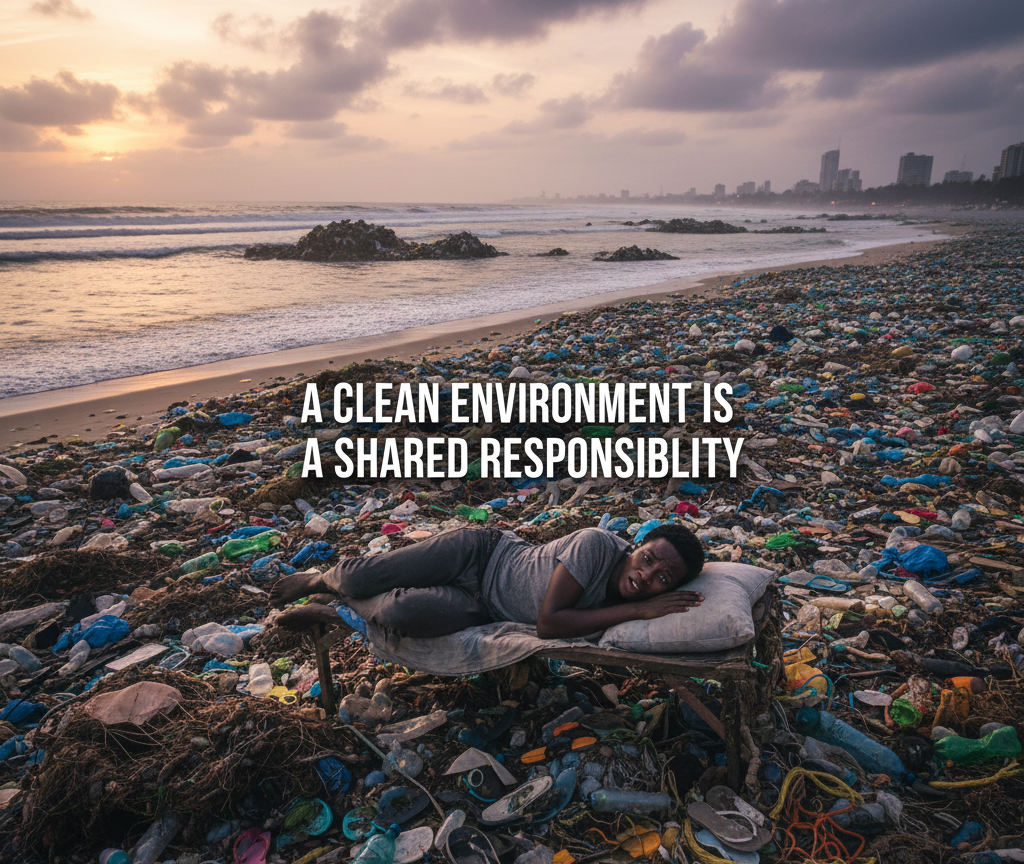
Imagine waking up to the sound of waves crashing against the shore, only to find plastic waste washing up with the tide. This is the harsh reality facing Ghana’s waterways, from the Volta River to our beautiful coastlines. It’s time to take action: a clean environment is a shared responsibility.
We’ve seen the devastating impact of plastic pollution on ecosystems and human health. Ghana’s water bodies are increasingly becoming conduits for plastic waste, affecting aquatic life, human consumption, and overall ecosystem balance. According to Jambeck et al. (2015), mismanaged plastic waste contributes significantly to marine pollution, with an estimated 8 million tons of plastic entering the world’s oceans annually. The impacts are far-reaching:
- Aquatic life is harmed through ingestion and entanglement
- Human health is at risk due to contaminated water sources and microplastics in the food chain
- Local economies suffer as tourism and fishing industries decline
Someone may ask, “What Is The State of Plastic Pollution in Ghana?”
Ghana generates approximately 3.1 million tons of waste annually, with plastics making up around 11% of this waste (Ampofo et al., 2020). The majority of this plastic waste ends up in our waterways, harming aquatic life and contaminating the food chain. Some alarming statistics include:
- Ghana’s Accra Metropolitan Area alone generates around 1,500 tons of waste daily, with only 10% being recycled (MESTI, 2019)
- The Volta River is estimated to carry around 73,000 tons of plastic waste into the ocean annually (Jambeck et al., 2015)
- Plastic pollution costs Ghana’s economy an estimated $50 million annually due to impacts on tourism, fishing, and healthcare (UNDP, 2018)
So, what can we do to help?
We need to reduce single-use plastics like refuse plastic bags, straws, and water bottles and opt for reusable alternatives instead. Also, separate your waste and participate in local recycling programmes. Compost organic waste to reduce landfill waste. We need to also choose businesses that prioritise sustainability and environmentally friendly practices and also educate communities about the impacts of plastic pollution and promote sustainable practices.
What then are some of the Solutions and Initiatives we can put in place to curb Plastic Pollution here in Ghana and around the world in general?
Thanks to community-led initiatives and government efforts like Green Advocacy Ghana, Kaya Connect and Plastic Bank Ghana, communities are coming together to tackle plastic pollution. We’re proud to highlight some amazing Ghanaian projects and initiatives making a difference.
- Kaya Connect: A social enterprise promoting waste recycling and community engagement, with a focus on plastic waste management.
- Plastic Bank Ghana: A platform connecting recyclers with buyers, incentivising plastic waste collection and recycling.
- Green Ghana: A project promoting sustainable waste management practices and community-led clean-up initiatives.
- UNDP-Ghana’s Environmental Programme: Supporting sustainable waste management and plastic pollution reduction efforts.
These initiatives demonstrate Ghana’s commitment to reducing plastic pollution and promoting a cleaner environment. As Psalm 24:1 reminds us, “The earth is the Lord’s, and everything in it.” We have a responsibility to protect and preserve our planet for future generations. Let’s all join forces to keep our waterways clean and promote sustainable practices.
Share your thoughts: As citizens, what can you do today to make a difference?
References:
Ampofo, J. A., Sarpong, D., & Mensah, E. (2020). Plastic waste management in Ghana: Challenges and prospects. _Journal of Environmental Management_, 261, 110261. https://doi.org/10.1016/j.jenvman.2020.110261
Jambeck, J. R., Geyer, R., Wilcox, C., Siegler, T. R., Perryman, M., Andrady, A., Narayan, R., & Law, K. L. (2015). Plastic waste inputs from land into the ocean. _Science_, 347(6223), 768–771. https://doi.org/10.1126/science.1260352
UNEP. (2018). _Single-use plastics: A roadmap for sustainability_. United Nations Environment Programme.
Wright, S. L., & Kelly, F. J. (2017). Plastic and human health: Microplastics as a vector for chemical exposure. _Environmental Science & Technology_, 51(12), 6634–6647. https://doi.org/10.1021/acs.est.7b00423
This is a great step and very insightful
Well done Gladys.
Congratulations
Great job, Lapilli